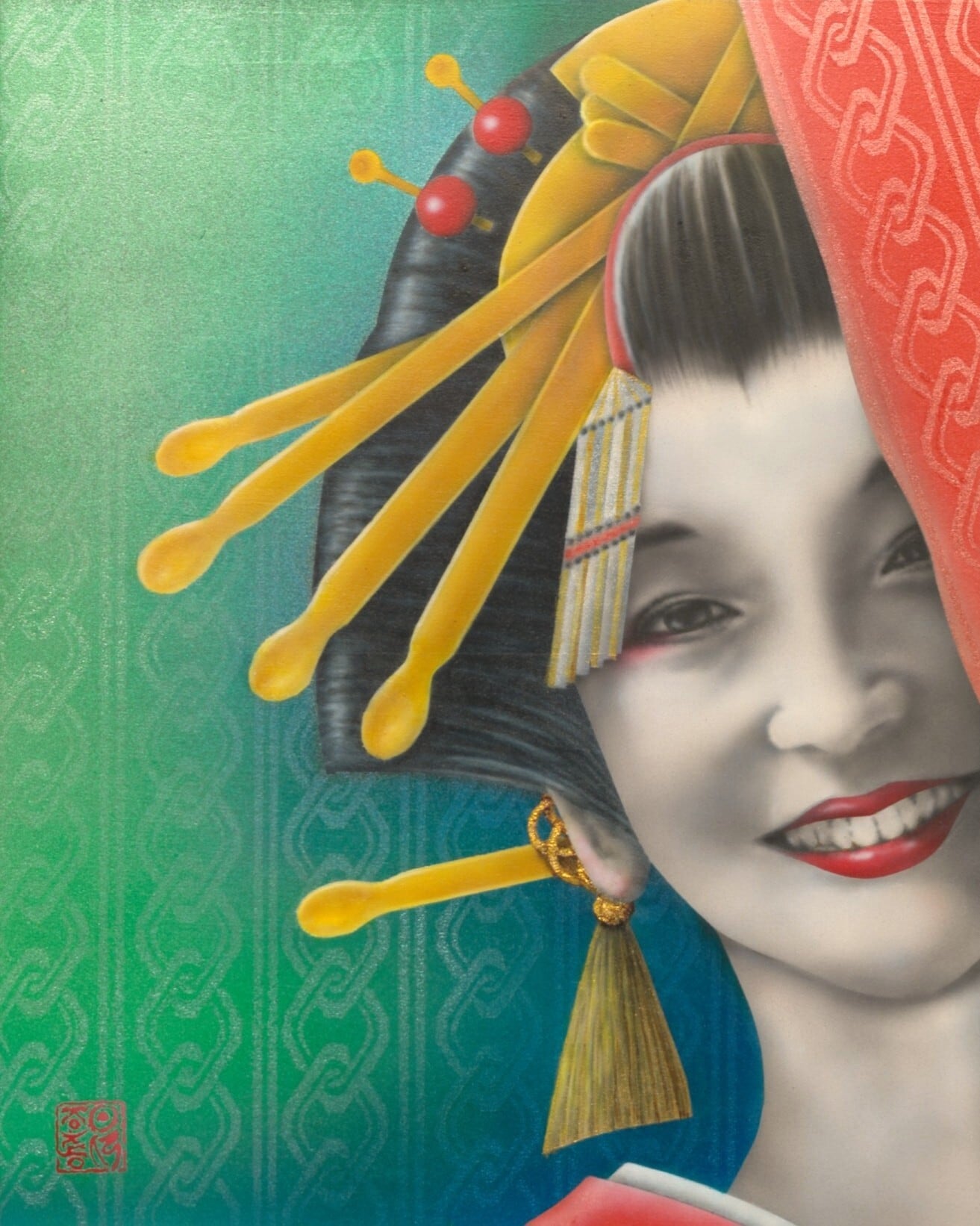


“Oiran with the Mizuhiki Hairpin” (2026) Acrylic on wooden board, 「水引簪の花魁」アクリル 金 木製ボード 27×22cm
¥44,000
残り1点
International shipping available
“Oiran with the Mizuhiki Hairpin” (2026)
Acrylic, gold, wooden board, 27×22cm
“Mizuhiki” literally means water pull or water‑drawing cord, yet it refers to a traditional Japanese decorative string made from twisted washi paper. Tied onto gifts, mizuhiki conveys prayers, sincerity, the binding of relationships, and wishes for good fortune.
In the Edo period, oiran were the highest‑ranking courtesans of the pleasure quarters. They led the fashions of their time with extravagant attire, elaborate hairstyles, and refined gestures, becoming icons admired like modern‑day stars. Yet behind this dazzling presence lay a harsh reality: many women were deprived of choices from a young age, bound by heavy debts and relentless labor under the strict regulations of the pleasure districts.
The chain motif in the background, known as “Yoshiwara‑tsunagi,” symbolizes how patrons were “kept and bound” once they entered Yoshiwara. At the same time, it represents the social constraints that restricted the freedom of the women who lived there. Peering through the curtain patterned with these chains, the oiran gazes outward with a gentle, hopeful smile—toward a world beyond confinement.
In contrast to Iceland, one of the world’s leaders in gender equality and women’s social advancement, Japan still ranks among the lowest of developed nations in global gender‑equality indices— a condition shaped in part by deeply rooted historical structures.
To open a gift, one must first untie the mizuhiki knot. The mizuhiki hairpin worn by the oiran symbolizes the many constraints historically tied around women, and carries a prayer that these bindings may one day be released— allowing them to step into a freer world, as seen in places like Iceland.
「水引簪の花魁」 2026
The Oiran Geisha with the Mizuhiki Hairpin
アクリル 金 木製ボード 27×22cm
「水引=Mizuhiki」はwater pull、water-drawing cordといった意味の和紙製の飾り紐の呼び名です。贈り物に結ぶことで「祈り」「誠意」「縁を結ぶ」「良縁の願い」などを表します。
江戸時代、花街遊女の最高位に君臨する花魁(おいらん)は豪奢な衣装や髪型、洗練された所作を備え、江戸のファッションをもリードするアイドルスター的な存在でした。しかし、一般庶民には手の届かない華やかさの裏で、多くは厳しい遊郭制度のもと人生の選択肢を奪われ、過酷な負債や労働に縛られ続ける現実がありました。
背景の鎖模様「吉原繋ぎ」は、一度吉原遊郭に来た客は繋ぎ留めて離さないという意味がありますが、彼女たちの自由を縛る社会的制約そのものでもあります。その鎖模様の暖簾越しにこちらを覗く花魁は、閉ざされた空間から希望と慈愛に満ちた笑顔で外の世界を見つめます。
世界で最もジェンダー平等と女性の社会進出が進んでいるアイスランドに対し、日本は未だその国際指標において先進国の中で最も低い水準に位置しており、背景には根強く残る歴史的構造があります。
贈り物を開けるにはまずこのMizuhikiの結びを開きます。花魁が挿した水引簪には、歴史の中で固く結ばれてきた女性たちに対する様々な制約が解かれ、アイスランドのようにより自由な世界へ解き放たれるよう祈りと願いが込められています。